Looking through a pinhole fence
In NYC photography with a tripod requires a permit. Pinhole photography requires exposures of multiple second or even minutes.
I was in New York making holograms at the Center for the Holographic Arts and wanted to get out of the darkroom and go capture the City.
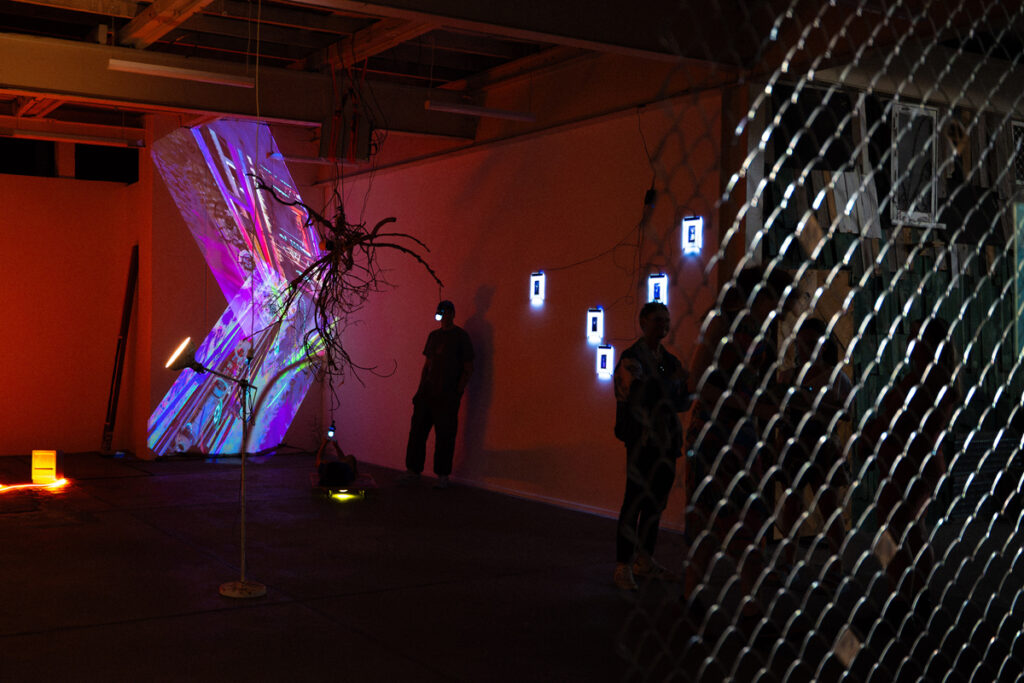
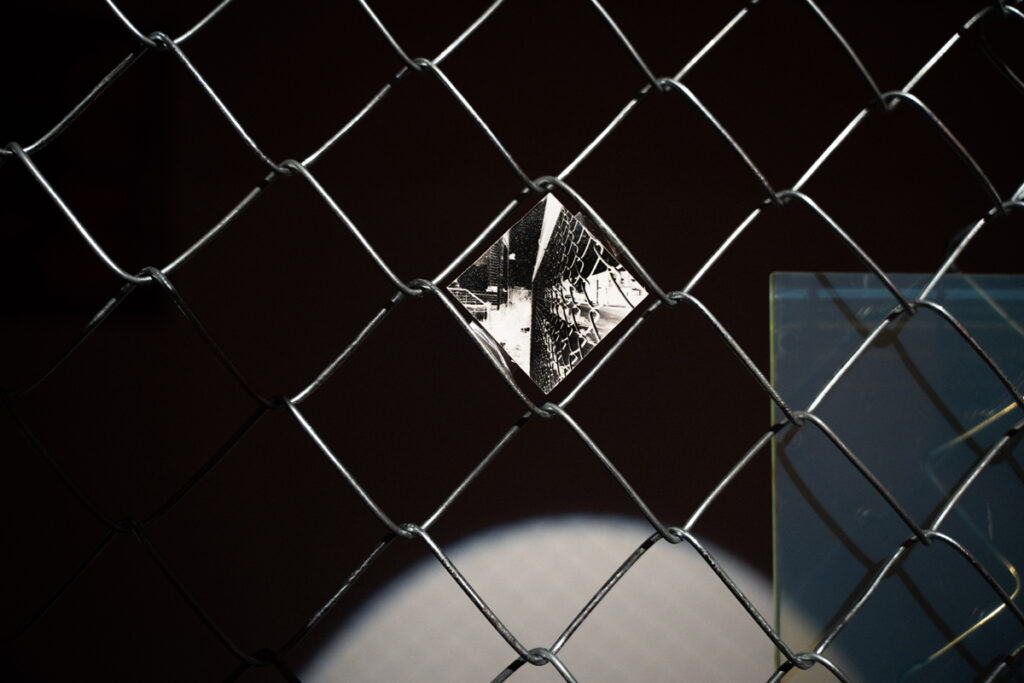
So, I built a pinhole camera from cardboard (with zoom) using a pinhole gifted by visiting artist Stefan Silies. The tiny camera was designed to be inserted into chain-link fencing. The abundance of fenced-off sites in NYC in 2004 enabled me capture arrays of perspective mirroring my process of animating holograms.
The photo capture process (which include changing the paper in a black bag between exposures} attracted the attention of authorities. Multiple levels of NYPD received explanations of pinhole photography which I now retell and extended for you both in my choice of language and to bring the optical information passing through a pinhole into dialogue with holographic imaging and my interpretation of Middles.
A photographic image is resolved by limiting the aperture selected to a tiny point and allowing the light passing through to be projected onto a plane.
Capturing an image from a pinhole, reveals the density of optical information passing through any point in space. It reminds me that the Middles is seething, and that only by limiting my perspective can I resolve meaning.
Holograms encoded image information at the pinhole. They are a perspective selector, like our eyes. The physical structure of the hologram is an etching of the direction and intensity of light that can then reshape light with this enfolded optical information.
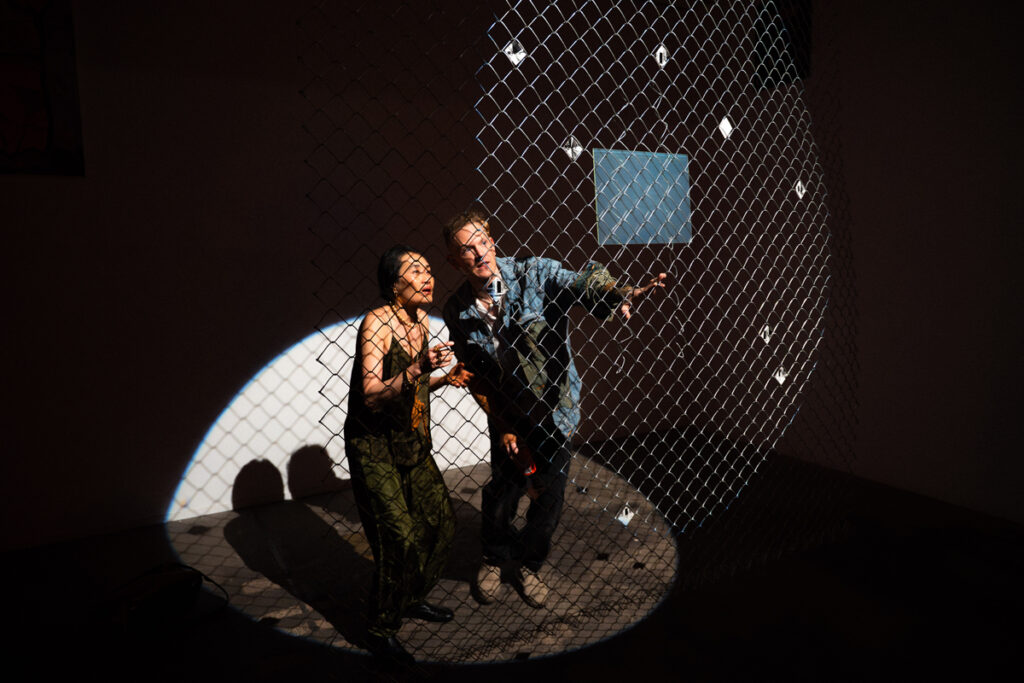
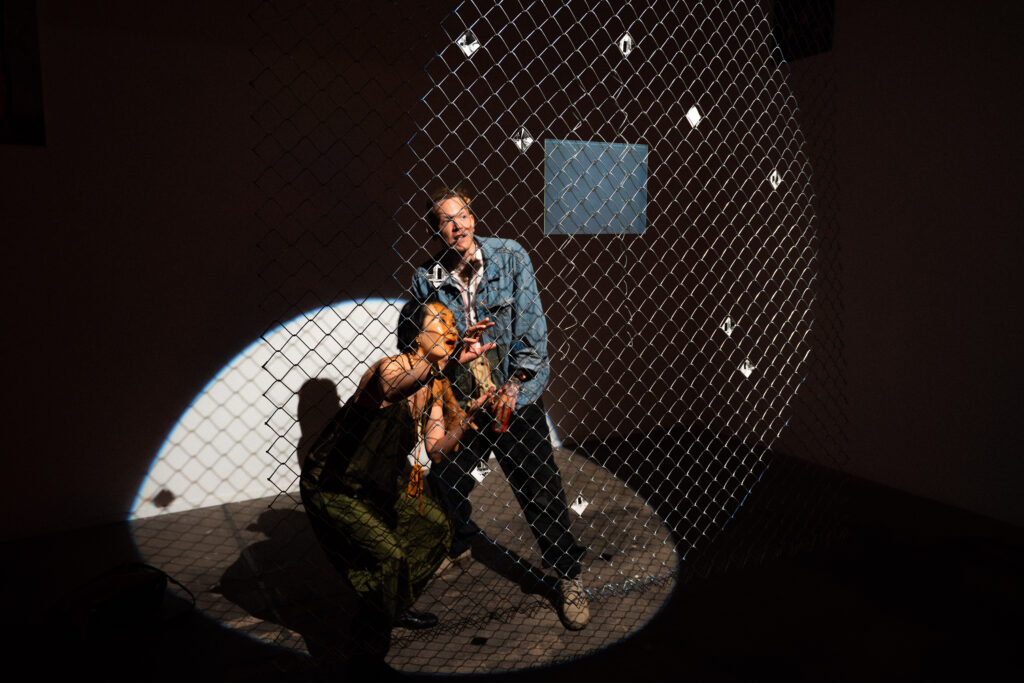
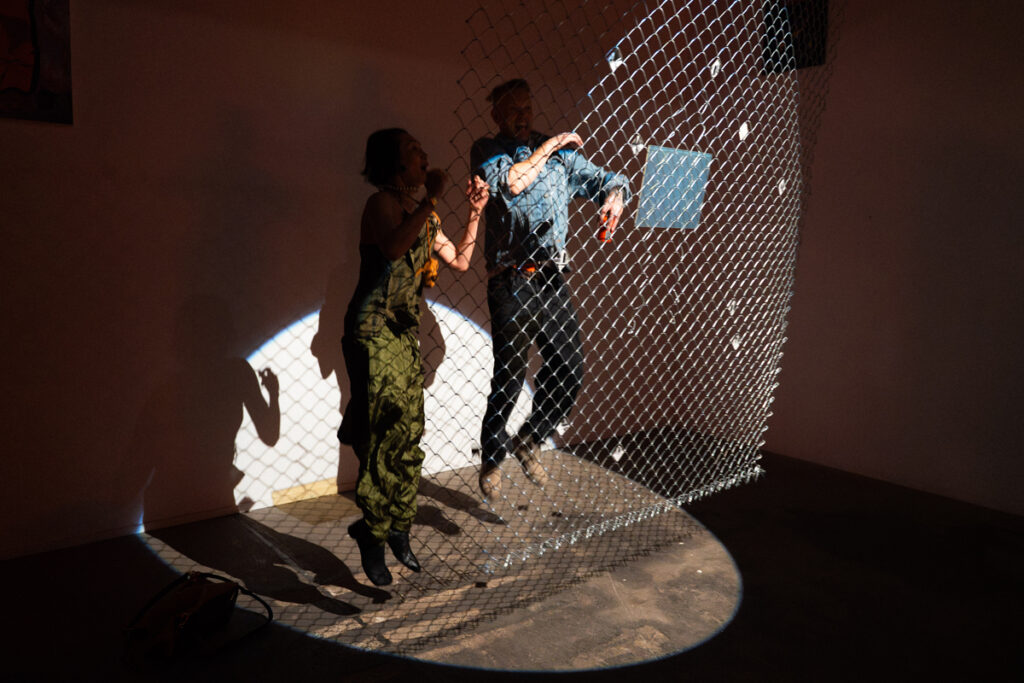
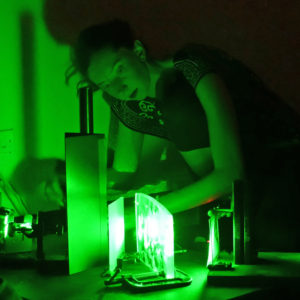
Looking through a pinhole fence is a hologram made from a series of digital images, rendered into 200 frames to create depth through parallax between layered scans of the pinhole photographs.
To make this into an animated image I stencil each frame across the surface of the hologram master, essentially making a series of pinhole information encodings. This master is reconstructed and recorded again into the hologram you see, projecting the pinholes out into space so your eyes can look through two at once, allowing you to perceive an image with stereo depth.
Move side to side, as I moved along the fences in NYC, to play the parallax animation.
Okay you made it through the technical explanation, (or skimmed hoping there was more) so now we get to the juice…but maybe I’ll leave you to do the juicing.
When making these images I was fascinated by places that are part of our cities but not accessible legally, culturally or economically. The literal chain-link fences were porous, thou more often now these have been replaced by boards or adorned with banners, as even seeing through is limited.
Barriers can be used as anchors and their friction offers energy. By creating with selective attention, the edge is ours for the playing.